Catan Ports & Harbors: Complete Guide
Catan ports and harbors let you trade resources with the bank at better than the standard 4:1 rate: 3:1 at generic ports, or 2:1 at resource-specific ports. There are nine ports placed around the island’s edge, and controlling access to the right one is a genuine strategic asset. Players who understand Catan ports and harbors trade from strength all game; players who ignore them are at the mercy of whoever will deal.
The Nine Ports and Harbors
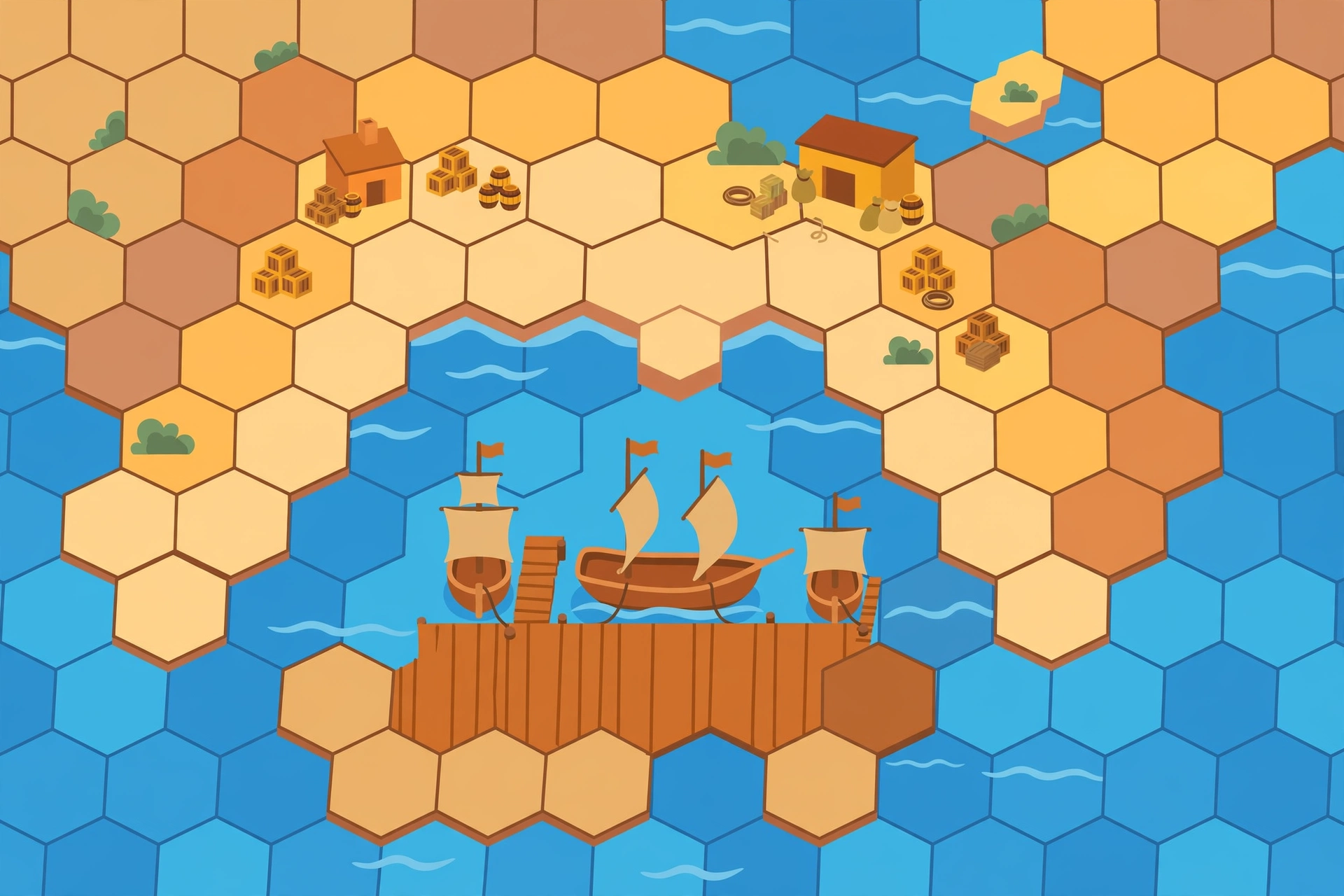
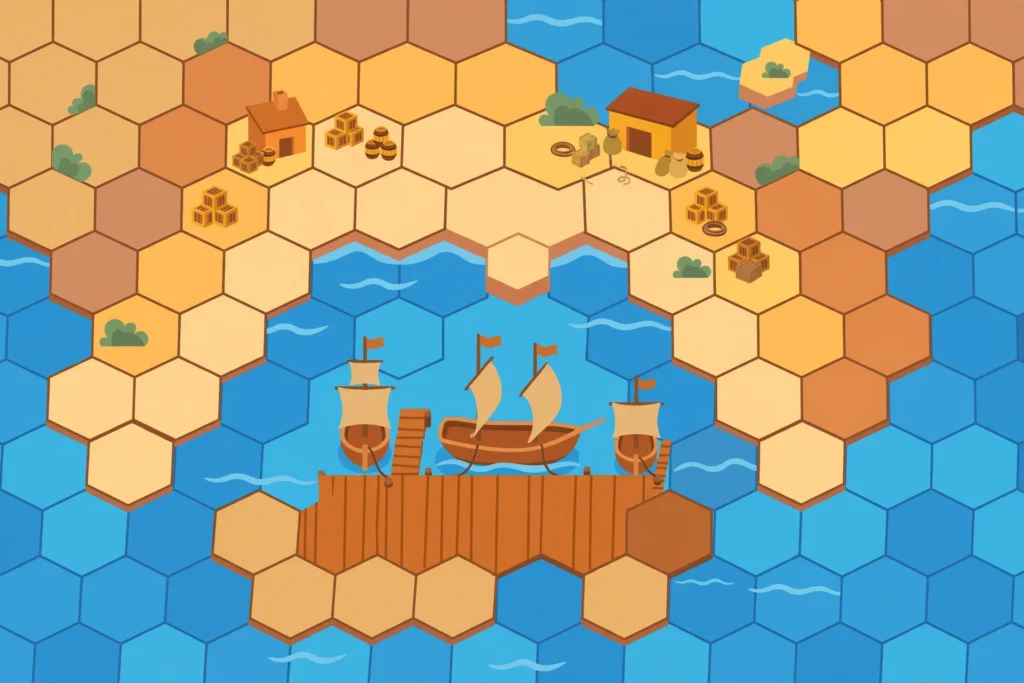
The base game includes nine port tokens, shuffled and placed on the nine harbor spots around the frame: four 3:1 ports — trade any 3 identical resources for 1 of your choice; five 2:1 ports — one each for lumber, brick, sheep, grain, and ore. To use a port, you need a settlement or city on one of its two adjacent coastal intersections. The port works for all your trades from that point on — no per-use cost, no limits. Learning how these Catan ports and harbors interact is the foundation of every port strategy.
3:1 Ports: The Safety Net
The generic 3:1 port is the most underrated asset in Catan. It means you never truly depend on opponents for any resource, surplus of anything converts at a reasonable rate, and your negotiating position improves — “I’ll just use my port” is a credible walk-away. A 3:1 port doesn’t win games by itself, but it prevents losses. Players with port access don’t stall; players without it do.
2:1 Ports: The Engines
The resource-specific 2:1 ports are stronger and more situational. A 2:1 port is an engine when you produce that resource in surplus and need everything else. Example: a city on a 6-sheep hex with a 2:1 sheep port nearby converts 2 sheep into whatever you’re missing every few rolls. The five 2:1 ports vary in value by board — on an ore-poor board, the 2:1 ore port is gold. Read the board’s economy when valuing Catan ports and harbors.
Harbor Placement Strategy
Settling directly on a port. Coastal intersections adjacent to ports are legitimate settlement spots, especially mid-game when you know your surplus. Coastal spots usually touch only 2 hexes instead of 3, so you’re trading production for trading power — worth it when the pips are decent and the port matches your economy.
Building toward ports. More common: your inland engine produces a surplus, and you road toward the matching port over several turns. Plan this early.
Denying ports. In tight games, settling a port intersection just to deny it to an opponent is legitimate — if someone’s sheep engine is about to go online, taking the 2:1 sheep port yourself can be the best defensive play on the board.
Ports and Negotiation
Port access changes every trade you make. With a port: you trade for tempo and convenience — bad offers get declined with a smile. Without a port: you’re dependent, and opponents charge accordingly. Never announce your port conversions triumphantly. Quietly using a 2:1 port every turn is fine; loudly converting six times a round makes you the table’s problem. That’s why Catan ports and harbors double as a negotiation asset, not just a trading tool.
Common Port Mistakes
Chasing a port too early. Build your engine first; ports come second. Patience with Catan ports and harbors pays off: build the engine first, then plug in the port that multiplies it.
Ignoring which 2:1 is which. Match the port to the board’s economy.
Forgetting ports in placement. When choosing between two similar inland spots, the one two roads from a useful port wins.
Frequently Asked Questions
How do Catan ports and harbors work? Place a settlement or city on either of a port’s two adjacent coastal intersections and you can trade at that port’s rate (3:1 generic, 2:1 specific) for the rest of the game.
Do I need a settlement on both port intersections? No — one settlement or city on either gives you full use of the port.
Can I use multiple ports? Yes. Each settlement/city on a port intersection unlocks that port.
Do ports work with cities? Yes — cities on port intersections use ports exactly like settlements do. (Cities don’t improve the rate; 2:1 stays 2:1.)
What’s better: 3:1 or 2:1? The right 2:1 beats a 3:1, but any port beats no port. For the game’s background, see Catan on Wikipedia.
Master Catan ports and harbors and you’ll never be at the mercy of the table again.
Catan is a trademark of Catan GmbH. This is an unofficial fan guide.